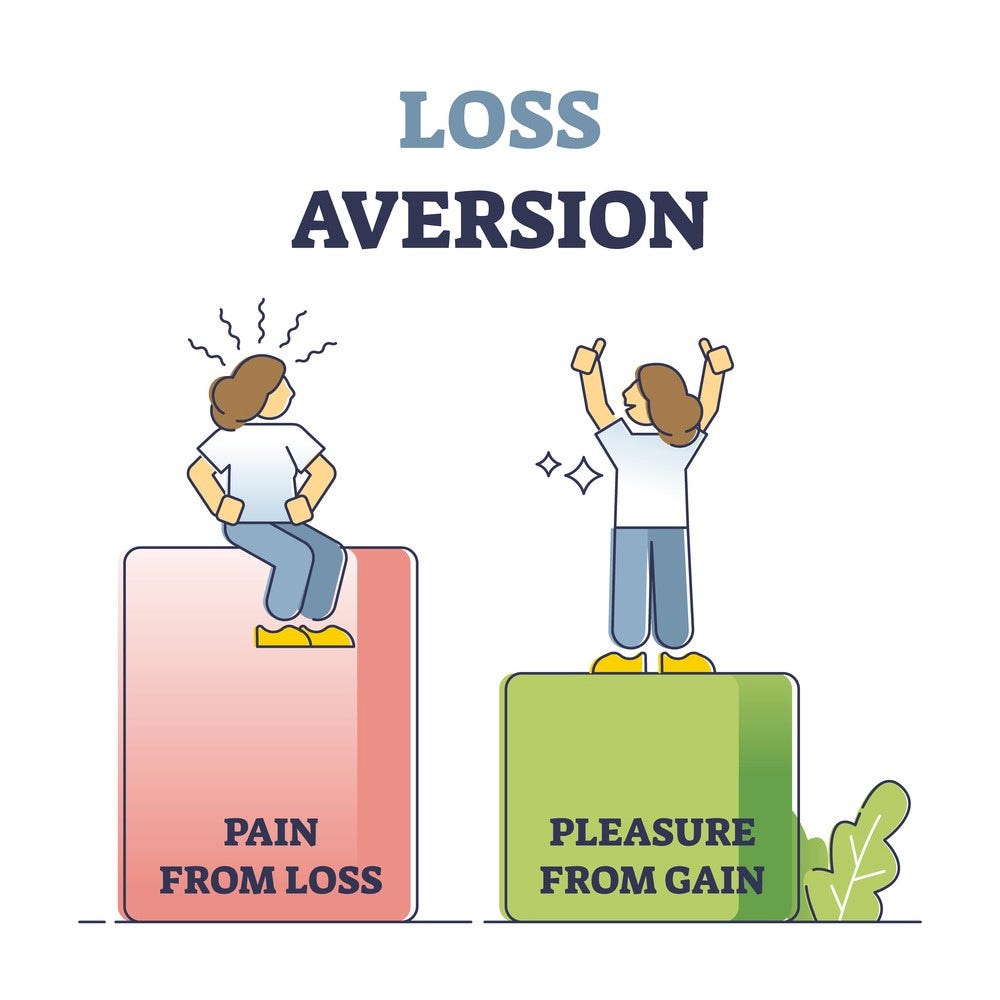
Human beings suffer from loss aversion, a cognitive bias where the pain of losing feels twice as bad as the pleasure of winning. I.e. most people would rather not lose $20 than win $20.
This funny asymmetry is adaptive in situations where victory and defeat are a matter of life and death. In much of human history this was the case. Losing meant you could never play again (i.e. death) so it made sense to be especially afraid of it.
But life in modern economies and the virtual world is not like this. Most of us now live in relatively open, forgiving environments. Loss rarely means game over.
“First World losses” are not as significant as they appear. If you lose your job you can get another one. If your startup fails, you can pivot. If you get rejected by your crush, you can find another.
These are the kinds of games most of us play most of the time. Low stakes. “Sorry, try again” type games. At most we risk our status, not our lives.
But focusing on avoiding loss brings a much bigger risk: mediocrity.
Mediocrity Risk - the tendency for a given path of action to lead to mediocre outcomes. (i.e. the risk of becoming mid).
This is the risk that remains when you correct for all the other ones. Sure, nothing bad will happen. You won’t lose your money. You won’t feel extreme emotions. But the storyline of your life will atrophy. You’ll forgo all adventure and become a loser (paradoxically).
Loss aversion optimizes for mediocrity. It ensures that you keep playing the game without winning it.
What if instead, you played to win?
I play to win, whether during practice or a real game. And I will not let anything get in the way of me and my competitive enthusiasm to win. — Michael Jordan