Daniel Kazandjian
Productivity systems are procrastination tools for slow decision-makers.
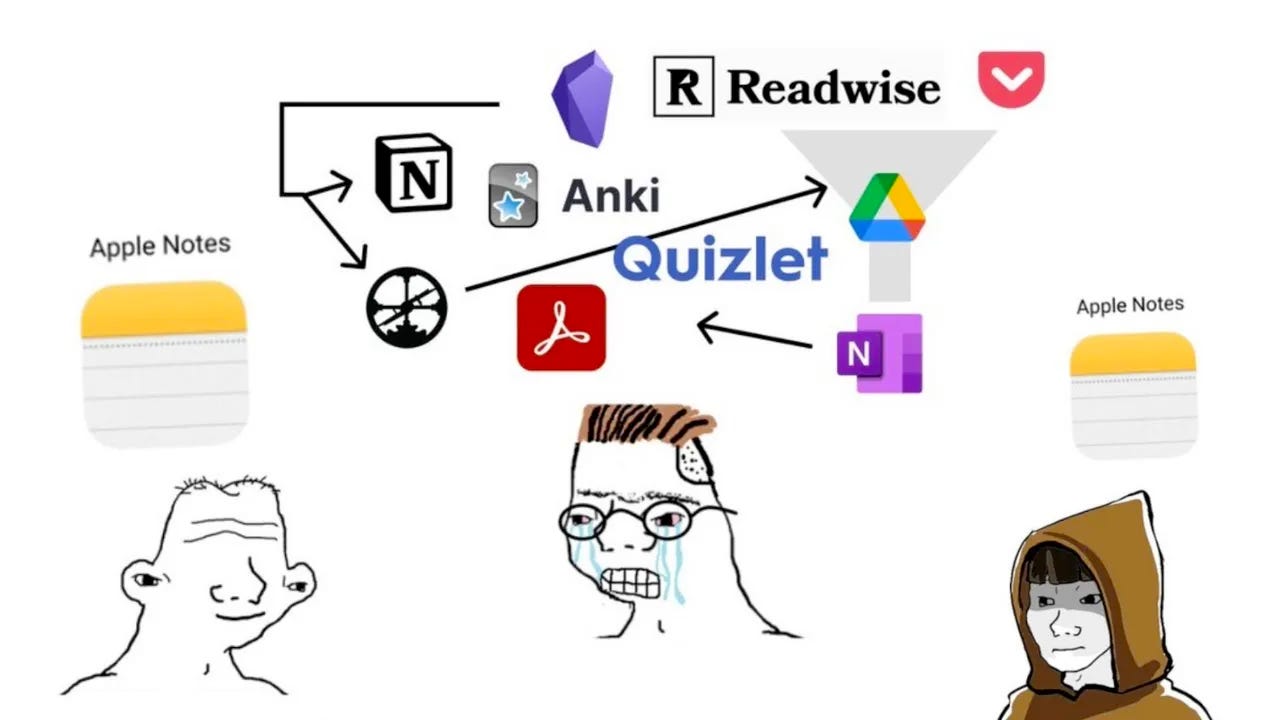
Everyone knows a version of the unproductive guy with an intricate arrangement of digital notes, task-management tools and flash-cards. We also know counter examples of highly effective people who “just use Apple Notes” or write everything by hand. What’s going on here?
For many years I’ve been professionally coaching top performers on how to embody true effectiveness. I actually love methods like David Allen’s Getting Things Done or Tiago Forte’s Building a Second Brain. I’m the first to admit that systems and tools can be powerful.
However “setting up systems” is almost always a distraction for the people who think they need them. At least initially. Most people haven’t done Step 1 and systems are Step 3.
Today I want to explore the raw intentionality of the high-performing Apple Notes-using CEO. He’s insanely busy, mostly unsystematic, tool-averse — yet highly effective. He actually gets shit done.
People like him have tacitly internalized a white-belt of productivity fundamentals. Skills that elite positions select for.
This is Part 1 of the endlessly deep rudiments that come before the tools and systems. The steps you don’t want to skip.
“Build your empire on the firm foundation of the fundamentals.” — Lou Holtz
Before we begin here are some design constraints.
Minimum 👌
This won’t be perfect. This won’t stop your brain from taking back the job of remembering tasks. This won’t guarantee that 0% of your responsibilities fall through the cracks. You won’t “scale your knowledge products” or learn fancy keyboard shortcuts. “Minimum” means some disorder and inefficiency is acceptable.
Viable 🌱
MVP is for your worst week. The true environmental conditions of your life. Not the idealized platonic form of your life. It also needs to generate greater sophistication as needed (see Gall’s Law).
Productivity 💪